Category: Research

31st Visible Evidence Conference in Philadelphia

Reaching Philadelphia from Luxembourg for the 31st edition of the Visible Evidence Conference felt like stepping through a cinematic lens. My early morning arrival into the city presented an immediate sense of vintage Americana, evoked by the unfamiliar design of local buses and the endless, uniform red-brick row homes that define the urban fabric, and instantly reminiscent of 1960s American films. This sense of place, blending history with contemporary urban life, set a thoughtful mood for a conference centered on “Community”.

The conference took place from August 3 – 7, 2025, and was hosted by Temple University’s Film and Media Arts department, a sprawling academic complex that impressed with its scale and integration into the city. I was honored to be a part of this scholarly convergence, which began with a thoughtful acknowledgment of the land of Philadelphia as part of Lënapehòkink, the ancestral homelands of the Lenape peoples.

About the Event: Community and Global Context

Visible Evidence is the foremost academic gathering dedicated to documentary film studies. This year’s theme, “Community”, was inspired by Philadelphia’s significant history in community media. The conference successfully expanded this topic into a globally-oriented discourse, welcoming scholarship that conceived of community in its broadest sense, from practitioners to virtual, digital collectives. For five dense days, the conference served as a vital forum for intellectual exchange through scholarly papers and screenings, all presented in person.

A Harvest of Knowledge and Inspiration

Due to the sensitive nature of political situations, the specifics of individual panels and participants are best left private. However, the conceptual impact of the event was profound.

My own research is rooted in documentary film aesthetics, focusing on the intrinsic qualities of the film object. The week-long immersion into the multidisciplinary concept of “Community” helped me re-contextualize this work. It was inspiring to see academicians from different fields engaging with documentary studies in a broader social and ethical context. This affirmed that even purely aesthetic research is enriched when it acknowledges the real-world community mandates that shape our art form.
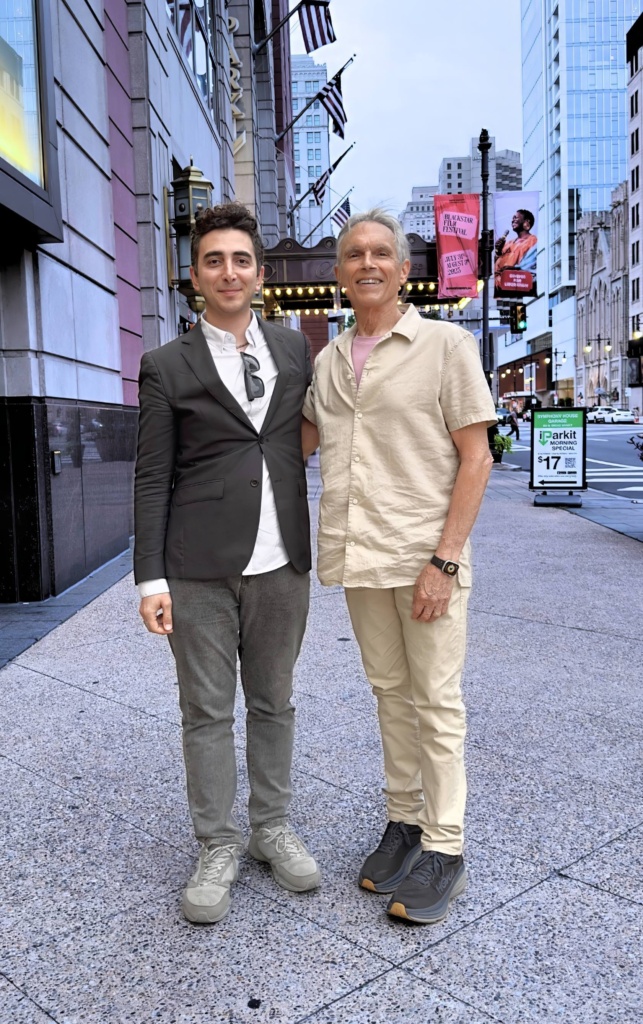
Reflecting on my experience at Visible Evidence XXXI, I am energized by the intellectual stimulation and the connections forged with scholars from across the globe. This year too, I had the privilege of meeting and communicating with Michael Renov, widely regarded as one of the foundational figures of contemporary documentary film theory, the founder of the Visible Evidence conference and Associate Dean of Academic Affairs at the USC School of Cinematic Arts. And this year, when we took a photo together, he commented that it felt like he was handing something over to me with this photo. His words were deliberately vague, but they carried an emotional weight that I understood as a kind of blessing – an encouragement to continue my theoretical explorations in documentary cinema.

My Research: Crowdsourced Aesthetics and Institutional Tension

As part of the conference, I had a paper presentation titled Crowdsourced Aesthetics in Documentary Films: How Festivals Influence Narrative and Visual Trends.

This study reflected ongoing findings within the framework of my dissertation related to festival studies.

The Core Problem: The core problem my research addresses is how the major festivals of small countries, examined through the Golden Apricot International Film Festival (GAIFF) and the Luxembourg City Film Festival (LuxFilmFest), can affect national documentary cinema. Certain stylistic and narrative tendencies gain visibility within national cinema not only through filmmakers’ creative practices but also through the legitimizing role of festivals that select, circulate and validate them. This dynamic produces an institutional tension: while festivals in smaller countries are tasked with serving as cultural platforms, educational arenas and networking hubs, their curatorial choices simultaneously establish aesthetic norms that influence what is recognized as legitimate documentary practice. In this sense, festivals may operate both as catalysts for innovation and as mechanisms of constraint, fostering some forms of creativity while narrowing the possibilities for others.

Final Thoughts and Gratitude

I extend my gratitude to the Doctoral School in Humanities and Social Sciences (DSHSS) at the University of Luxembourg for providing the financial support necessary for my participation. My deepest appreciation also goes to my doctoral supervisor, Dr. Gian Maria Tore, whose critical guidance remains invaluable in shaping my academic journey.

About my experience in the 2024 Visible Evidence conference, you can find here: https://segkirakossian.com/visible-evidence-30/

Seg Kirakossian
Doctoral Researcher at the University of Luxembourg

Visible Evidence Conference in Australia

The official program has been published for the 30th edition of Visible Evidence, the foremost international scientific conference on documentary cinema. I am honored to announce that I will present a paper this year contributing to the discourse on the aesthetics of documentary cinema.

This milestone edition of Visible Evidence is hosted by the School of Media, Film and Journalism of Monash University (Melbourne, Australia) in cooperation with Australia’s National Museum of Screen Culture ACMI from December 17 to December 20, 2024. The conference, renowned for its transdisciplinary approach attracts participants from across the globe, including scholars and researchers from leading institutions such as the University of Cambridge, Harvard University, the University of Sao Paulo, York University, the University of Edinburgh, the University of Sydney, UCLA, the University of Amsterdam, Tokyo University of Foreign Studies and many other. This gathering will explore a wide range of topics, including the impact of new technologies, ethical considerations, innovative techniques and the broader societal implications of documentary filmmaking.

The theme of this year’s conference, “Decentering Documentary: New Visions and Perspectives”, aims to interrogate traditional frameworks of documentary production and critique, challenging existing centers of power, vision, and perspective. This paper aligns with one of the conference’s principal objectives: decolonizing documentary studies by amplifying diverse voices and perspectives. Particularly, my study is grounded in an analysis of Armenian and Luxembourgish documentary films – cinematic entities that remain underrepresented in the academic literature on documentary cinema.

  • My Contribution to the Conference

I will be representing the University of Luxembourg, presenting a paper titled “Redefining Traditional Aesthetic Norms in Documentary Cinema Through Experimentation and Innovation in Narrative Structure and Storytelling Techniques“.

This paper seeks to initiate a dialogue on the need to reassess conventional principles used in evaluating documentary aesthetics especially when it comes to the new possible mode of documentary filmmaking – interactive documentary. The aforementioned challenges the traditional principles of the six modes of documentary established by Bill Nichols. The experiment I conducted for this paper is prompted by the rapid advancements in audiovisual technologies and artificial intelligence, which will bring new possibilities for viewer engagement and dynamic narrative structures.

In particular, with this paper I want to find the answers for the following questions:
Can the film be considered a documentary if faking technologies are used?
Can a documentary adapt in real time to the emotional state of the viewer?
What if a documentary could change based on collective audience input across different geographical locations?
Is it possible for a documentary to continuously evolve even after its release, influenced by ongoing real-world events?
How can interactivity be taken beyond individual engagement and become a form of social intervention or activism?
Could a documentary be co-created by its subjects and viewers, blurring the lines between filmmaker, subject, and audience?

My participation in this conference is an opportunity to engage with scholars, foster academic collaborations, and contribute to the ongoing discourse on the evolution of documentary cinema studies.

  • Acknowledgments

I express my sincere gratitude to the Doctoral School in Humanities and Social Sciences (DSHSS) at the University of Luxembourg for providing the financial support that enabled my participation in this conference. This financial support has been essential for my participation and presentation of my research at this prominent international event. The University of Luxembourg, home to 1,000 doctoral candidates and 7,000 students, is dedicated to advancing a broad spectrum of academic research, including within the Institute of Romance Studies, Media and Arts, the Doctoral School in Humanities and Social Sciences, and the Faculty of Humanities, Education, and Social Sciences.

I am also deeply thankful to my doctoral supervisor at the University of Luxembourg Dr. Gian Maria Tore whose critical guidance has been essential in refining and strengthening my work.

Additionally, I would like to express my appreciation to Dr. Siranush Galstyan, who was my supervisor during my first PhD program at the Yerevan State Theatre and Film Institute (2013-2016). Her mentorship during the early stages of my doctoral studies was invaluable.

  • About Visible Evidence

Established 30 years ago by prominent American scholar Michael Renov (University of Southern California) alongside Jane Gaines, Bill Nichols, Brian Winsto, Visible Evidence has become a cornerstone of global documentary film studies. Through its annual conferences and publications, Visible Evidence continues to advance a transdisciplinary approach, bridging gaps between theoretical frameworks and the practicalities of documentary filmmaking. Visible Evidence began as a conference at Duke University in 1993. Subsequent editions have been held on five continents, most recently in New York City, USA (2011), Canberra, Australia (2012), Stockholm, Sweden (2013), New Delhi, India (2014), Toronto, Canada (2015), Bozeman, USA (2016), Buenos Aires, Argentina (2017), Bloomington, Indiana, USA (2018), Gdansk, Poland (2022), University of Udine, Italy (2023).

I am privileged to contribute to this year’s discussions and to participate in an event that promises to illuminate new pathways in the study of documentary aesthetics.

Seg Kirakossian (Sergey Kirakosyan)
Doctoral researcher at the University of Luxembourg